How to Track Local Google Rankings by City (2026)
How to track local Google rankings by city: why SERP checks drift without local IPs, which proxy type to use, and how to monitor AI Overviews at scale.
SEO proxies are intermediary IP addresses that let you query Google (and other search engines) at scale, from any location, without being blocked. Every serious rank tracker, from the SaaS platforms you pay $100/month for to in-house SERP monitoring scripts, runs on top of a proxy network. Without one, Google throttles you after a handful of automated queries.
Looking for the proxies themselves? See SEO proxies for rank tracking. This guide covers why rank tracking fails without proxies, which proxy type to choose, and how to build accurate local SERP tracking, including the newest requirement for 2026: monitoring Google AI Overviews.
Why Rank Tracking Breaks Without Proxies
Google's anti-automation stack is aggressive because SERP scraping is one of the most common bot workloads on the internet. Query from one IP repeatedly and you will hit, in order:
- CAPTCHAs: usually within 10-30 rapid queries from a single IP.
- The
429 Too Many Requestswall: sustained querying gets your IP rate-limited. - Personalization and location skew: even when results load, Google serves results localized to your server's location, not your customer's city. Your "rank #3" might really be rank #9 where your buyers live.
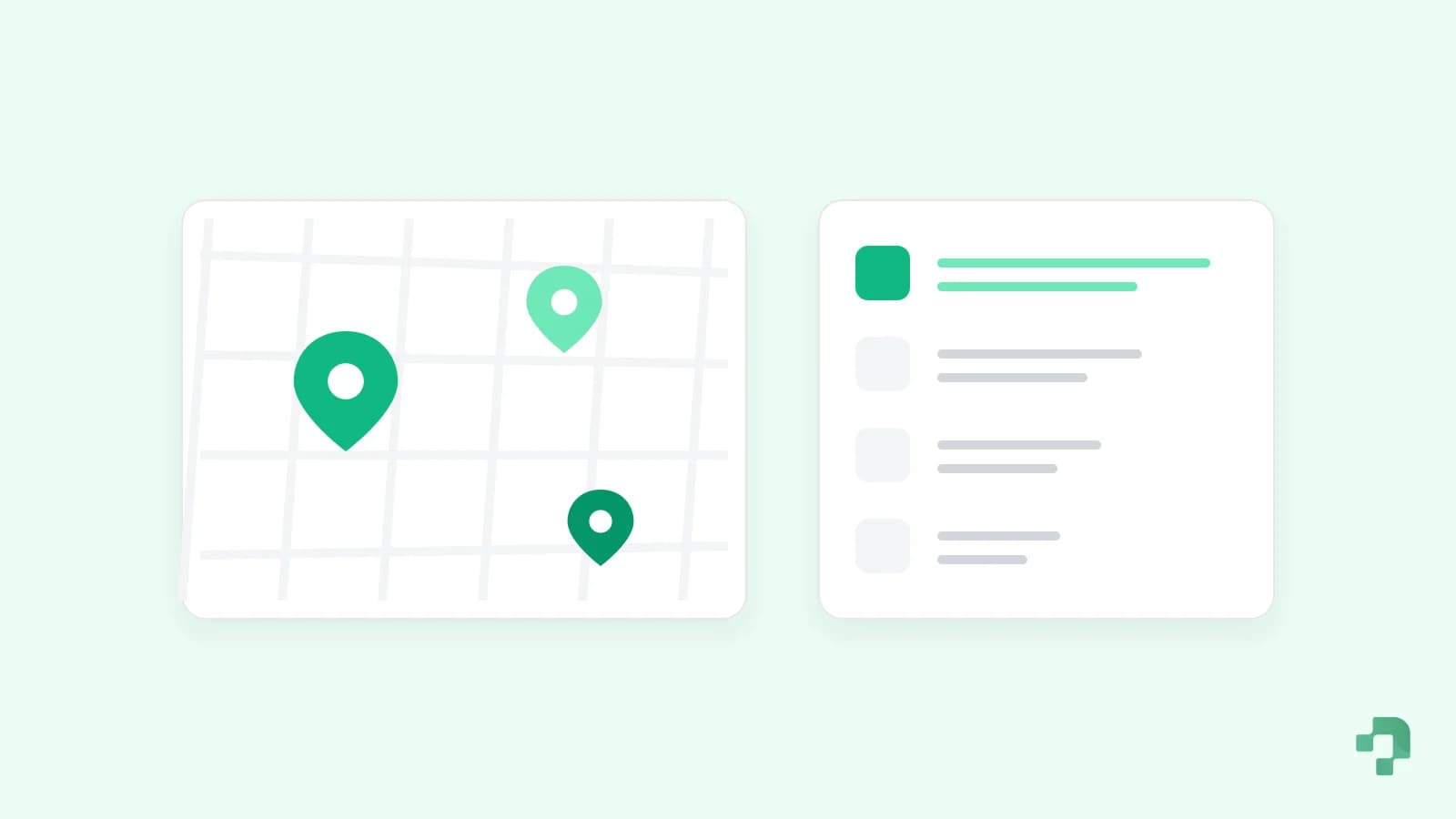
The third problem is the one most teams miss. Google's results are hyper-local: a search for "emergency plumber" or even a commercial query like "crm software" returns measurably different rankings in Miami vs. Seattle. If you aren't checking from an IP in the target city, your rank data is wrong, no matter how good your parser is.
Which Proxy Type Works for SERP Tracking?
| Proxy type | Google trust | Localization | Best for |
|---|---|---|---|
| Rotating residential | Very high (real home ISP IPs) | City-level | High-volume rank tracking, local SEO |
| Static ISP | High (ISP-registered, datacenter-hosted) | Country/region | Low-volume repeated checks, logged-in tools |
| Datacenter | Very low (flagged on sight) | Weak | Not recommended for Google |
Datacenter proxies fail at SEO. Google maintains reputation databases of cloud IP ranges (AWS, Azure, Hetzner and every proxy farm). Queries from these ranges get instant CAPTCHAs or generic, non-localized results, which silently corrupts your data. If your current rank tracker is "working" on datacenter IPs, check whether it's actually solving CAPTCHAs on every request and inflating your cost per check.
Rotating residential proxies are the industry standard for rank tracking: each query exits from a genuine home connection in your target city, so Google serves the authentic local page. For monitoring workflows that need a consistent identity (e.g., checking a Search Console-connected property or a logged-in tool), static ISP proxies give you the same IP for weeks with datacenter-grade speed.
For a deeper comparison, see our guide on residential vs. datacenter vs. ISP proxies.
How to Track Local Rankings: A Practical Setup
Say you want to check rankings for "best pizza" as seen by a user in Rome, Italy. With Proxio, geo-targeting happens directly in the proxy username, no API calls needed:
Proxy configuration:
- Host:
geo.proxio.cc - Port:
16666 - Username format:
your_username-region-it-city-rome
Python example:
import requests

PROXY_HOST = "geo.proxio.cc"
PROXY_PORT = "16666"
PROXY_USER = "your_username"
PROXY_PASS = "your_password"

# Geo-target: Rome, Italy (format: username-region-XX-city-YY)
proxy_user = f"{PROXY_USER}-region-it-city-rome"

proxy_url = f"http://{proxy_user}:{PROXY_PASS}@{PROXY_HOST}:{PROXY_PORT}"
proxies = {"http": proxy_url, "https": proxy_url}

headers = {
    "User-Agent": "Mozilla/5.0 (Windows NT 10.0; Win64; x64) AppleWebKit/537.36 "
                  "(KHTML, like Gecko) Chrome/126.0.0.0 Safari/537.36",
    "Accept-Language": "it-IT,it;q=0.9",  # match language to the IP's location
}
params = {"q": "best pizza", "hl": "it", "gl": "it"}

response = requests.get(
    "https://www.google.com/search",
    params=params, headers=headers, proxies=proxies, timeout=15,
)
# Parse the HTML to extract positions...
Two details that separate accurate trackers from noisy ones:
- Match
Accept-Languageandgl/hlparameters to the IP location. A Rome IP sendingen-USheaders is an inconsistency signal and skews results. - Rotate the User-Agent per session, not per request, and keep desktop and mobile checks separate, since mobile rankings differ and Google is mobile-first.
Sticky Sessions for Consistent Measurement
IP rotation is great for volume, but sometimes you need the same IP across a multi-request flow (e.g., paginating results, or comparing a SERP over an hour). Proxio supports sticky sessions in the username string:
# Keep the same Rome IP for 30 minutes
proxy_user = f"{PROXY_USER}-region-it-city-rome-sessid-myserp1-sesstime-30"
Scaling to Thousands of Keywords
A production rank tracker on a rotating residential pool follows a simple pattern:
- One request, one IP. The pool rotates automatically, so 1,000 keyword checks look like 1,000 different Italians googling.
- Throttle per target, not per IP. Even with rotation, keep a global pace of a few requests per second toward Google and back off on any CAPTCHA response.
- Track mobile and desktop separately by switching User-Agents, since positions regularly differ by 2-5 spots.
- Budget bandwidth realistically. A Google results page is roughly 0.3-1 MB. Tracking 1,000 keywords daily costs about 10-30 GB per month, which is why per-GB pricing matters for SERP workloads, and why Proxio's flat-rate options exist for heavy trackers.
New for 2026: Tracking AI Overviews
Rank tracking no longer stops at ten blue links. Google AI Overviews now appear on a large share of informational queries and reshape click-through rates. A #1 organic ranking under an AI Overview can receive a fraction of its former traffic.
Because AI Overviews render inside the live SERP and vary by location and language, the same residential-proxy setup shown above captures them. Modern SERP monitoring should record, per keyword and city:
- Does an AI Overview appear?
- Which domains does it cite? (Being cited is the new position zero.)
- Did the organic ranks below it shift?
Agencies are already selling "AI visibility monitoring" as a service; all of it runs on geo-targeted proxies, because there is no official API for any of this.
Final Thoughts
Accurate rank tracking is a data-quality problem, and IP quality is the foundation. Datacenter IPs give you CAPTCHAs and wrong data; a geo-targeted residential network gives you the exact SERP your customers see: organic positions, local packs, and AI Overviews included.
Ready to build reliable SERP tracking? Explore SEO proxy use cases or start with Proxio's residential network with 10% off your first order, applied automatically.
FAQ
Frequently Asked Questions
Short answers to the questions readers ask most.
What are SEO proxies?
SEO proxies are proxy servers used to send search-engine queries from many different IP addresses and locations. They let rank trackers and SEO tools check Google results at scale without triggering CAPTCHAs, and they make it possible to see the localized results a real user in a specific city would see.
Do I need proxies for rank tracking?
Yes, once you track more than a handful of keywords. Google rate-limits and CAPTCHAs repeated queries from a single IP within minutes. Proxies distribute your queries across many residential IPs, so every check looks like an ordinary user searching from the target location.
Which proxy type is best for rank tracking: residential, ISP, or datacenter?
Rotating residential proxies are the best choice for rank tracking because Google trusts home-ISP IP addresses and serves them normal, localized results. Datacenter IPs are flagged almost immediately. ISP proxies work well for lower-volume, repeated checks where you want a stable identity.
Can I track Google AI Overviews with proxies?
Yes. AI Overviews are rendered in the live SERP, so the same residential proxy setup that captures organic positions can capture whether an AI Overview appears for a keyword and which sources it cites. Because AI Overviews vary by location, geo-targeted proxies are essential for accurate monitoring.
How many proxies do I need to track 1,000 keywords daily?
With a rotating residential pool you don't count individual proxies. Every request exits from a different IP automatically. A single Proxio residential endpoint can comfortably handle 1,000+ daily SERP checks; you only pay for the bandwidth used, and a typical Google results page costs well under 1 MB.