Advanced Anti-Bot Evasion: Engineering Reliability into Web Scrapers
Beyond User-Agent rotation: TLS fingerprints, header consistency, backoff and country, state and city targeting for reliable scrapers.
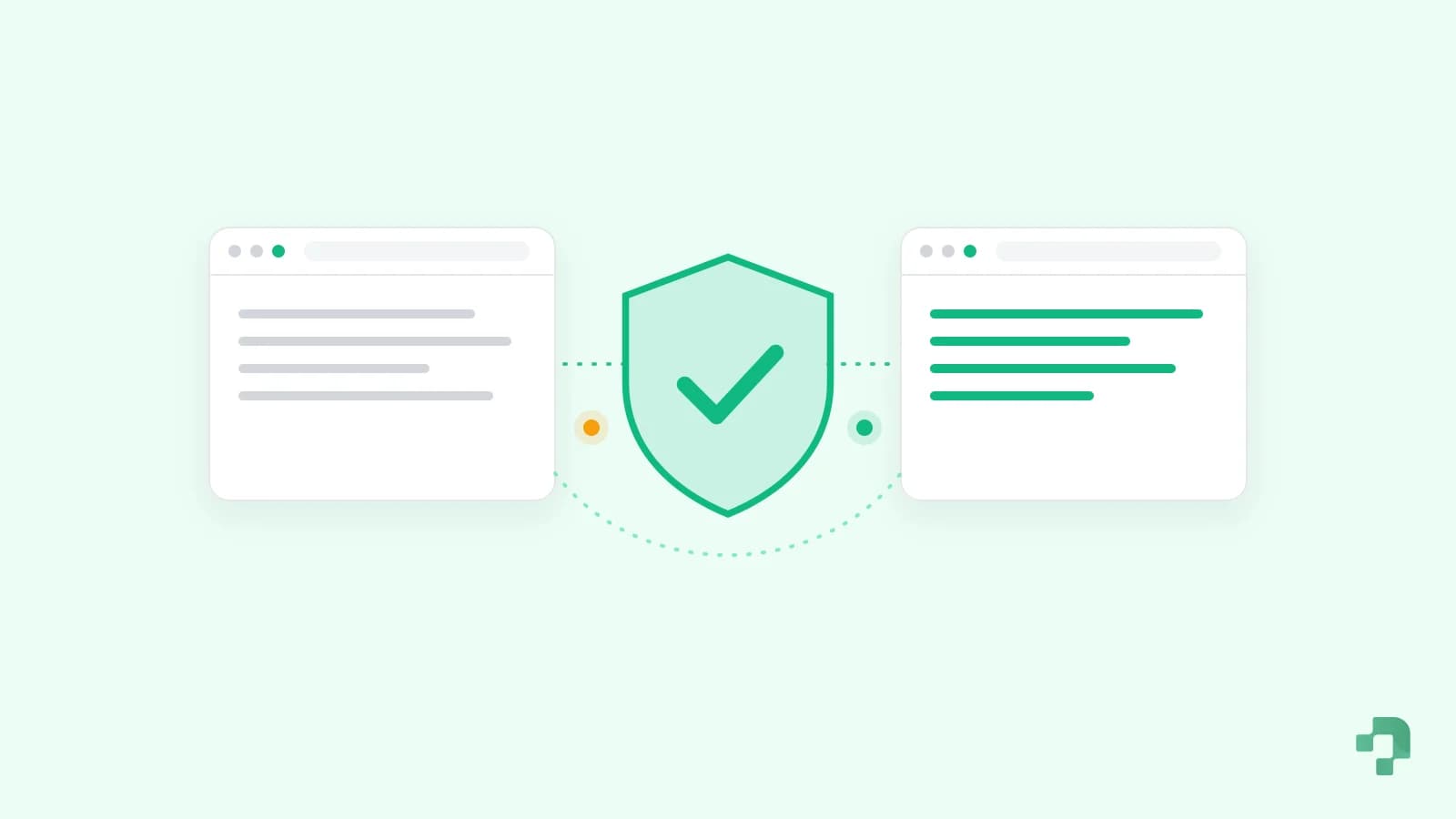
Writing a script to fetch a webpage is trivial. Writing a scraper that scales to millions of requests without triggering Cloudflare, Akamai, or Datadome is a distributed systems engineering challenge.
The era of simply rotating User-Agents and adding a time.sleep(2) is over. Modern Web Application Firewalls (WAFs) analyze the entire TCP/IP stack, TLS handshake fingerprints (JA3/JA4), and behavioral biometrics.
This guide explores architectural patterns and low-level optimizations required to maintain high throughput and low ban rates in 2026. (For a target-specific walkthrough, see our Amazon scraping guide.)
1. The Transport Layer: Solving TLS Fingerprinting
Most developers focus on HTTP headers but ignore the layer below: TLS.
Standard Python libraries like requests or urllib have distinct TLS Client Hello packets. WAFs can identify that your request is coming from Python, regardless of your "Chrome" User-Agent.
The Solution: You must mimic the TLS fingerprint of a real browser (JA3 signature).
- Avoid: Standard
requestslibrary for protected targets. - Use: Libraries that bind to browser-based TLS implementations, such as
curl_cffiortls-client.
from curl_cffi import requests

# Impersonate a specific browser's TLS signature and Header Order
# Using Proxio with geo-targeting for consistency
proxy_url = "http://user123-region-us-city-newyork:[email protected]:16666"
response = requests.get(
    "https://example.com",
    impersonate="chrome110",
    proxies={"http": proxy_url, "https": proxy_url}
)
2. Header Consistency & Entropy
WAFs check for Header Consistency. If you claim to be Chrome on MacOS in your User-Agent, but your Sec-Ch-Ua-Platform header says Linux, you are flagged immediately.
Furthermore, Header Order matters. Real browsers send headers in a specific sequence. Sending Accept-Language before Host might be valid HTTP, but it's a bot signal if Chrome doesn't do it that way.
Geo-Consistency
WAFs analyze the latency between the IP location and the claimed timezone/language in headers.
Don't: Use a US IP (-region-us) with Accept-Language: zh-CN (Chinese).
Do: Align your Proxio targeting parameters with your header logic. If you're targeting -region-us-city-newyork, set Accept-Language: en-US,en;q=0.9 and ensure your User-Agent reflects a US-based browser configuration.
3. Algorithmic Throttling: Exponential Backoff with Jitter
Hardcoded delays (sleep(3)) are statistically detectable and inefficient. A senior engineer implements Exponential Backoff with Jitter.
If a request fails (429/503), wait, but increase the wait time exponentially and add randomness (jitter) to prevent "thundering herd" problems.
import time
import random

def exponential_backoff(retries):
    base_delay = 1
    max_delay = 32
    # Calculate delay: 2^retries + random jitter
    delay = min(max_delay, (2 ** retries)) + random.uniform(0, 1)
    time.sleep(delay)
Human-like Request Patterns
Beyond error handling, successful requests should also have natural timing variations. Humans don't make requests at perfectly regular intervals.
import random
import time

def human_like_delay():
    # Simulate reading time: 2-8 seconds between requests
    base_delay = random.uniform(2, 8)
    # Add occasional longer pauses (scrolling, thinking)
    if random.random() < 0.1:  # 10% chance
        base_delay += random.uniform(5, 15)
    time.sleep(base_delay)
4. Headless Browser Hardening
If you must use Selenium, Puppeteer, or Playwright (e.g., for SPA rendering), "stock" configurations are leaky. They expose properties like navigator.webdriver and unique Canvas rendering hashes.
Engineering Best Practices:
- Use Playwright over Selenium: It connects via CDP (Chrome DevTools Protocol) and is harder to detect.
- Stealth Plugins: Inject scripts to override
navigatorproperties. - Context Isolation: Ensure each browser instance has a separate context to avoid cross-contamination.
- Canvas/WebGL Fingerprinting: Browsers render Canvas and WebGL with slight variations. Use libraries like
puppeteer-extra-plugin-stealthor inject noise into Canvas rendering to avoid unique fingerprints.
5. Heuristic Traps: Handling Honeypots
Sophisticated sites inject "Honeypot" links: elements invisible to humans (via CSS or off-screen positioning) but visible to the DOM parser. Always check computed styles (visibility: hidden, display: none) before interacting with an element.
6. Cookie Management & Session Handling
Proper cookie management is critical for multi-step flows. Use a persistent session and maintain cookie state across requests within the same session.
from curl_cffi import requests

# Create a session with persistent cookies
session = requests.Session()

# Use sticky sessions with Proxio to maintain IP consistency
proxy_url = "http://user123-region-us-sessid-mysession-sesstime-30:[email protected]:16666"
proxies = {"http": proxy_url, "https": proxy_url}

# All requests in this session share cookies and IP
response1 = session.get("https://example.com/login", impersonate="chrome110", proxies=proxies)
response2 = session.get("https://example.com/dashboard", impersonate="chrome110", proxies=proxies)
7. Granular Network Control: Geo-Targeting
Network consistency is paramount. For complex flows (like multi-step checkouts or local SEO scraping), you need precise control over your exit node.
Proxio allows for granular targeting directly through the username parameter string. This eliminates the need for external API calls; you configure your topology in the connection string itself.
Targeting Hierarchy
You can pick where the exit is, and separately whose network it sits on.
- Country:
-region-us(2-letter country code) - State:
-st-engfor England, an ISO 3166-2 code (needs a country) - City:
-city-paris(needs a country) - Network operator:
-asn-7018(independent of the geo segments)
A state or city without a country has nothing to resolve against and gives you an untargeted exit, so always set -region- first.
That last one is worth understanding, because it is the lever most scrapers never touch. An autonomous system is the block of networks a single operator runs, and its number identifies that operator: AS7018 is AT&T. Anti-bot systems routinely score a residential address from a major consumer carrier differently from one on a smaller regional network, so when "somewhere in the US" stops being enough, the carrier is the next thing to control.
It behaves differently from the geo segments, though. It is not a preference: when no exit is available on that network the connection fails instead of quietly using another one. That is the right trade when a specific carrier is the whole point and useless traffic is worse than no traffic, but it means an ASN plus a city narrows twice and fails more often than either alone. Use one or the other unless you genuinely need both.
Session Persistence (Sticky Sessions)
When scraping a login flow, your IP must remain constant. Rotating IPs mid-session will invalidate your cookies.
- Sticky Session:
-sessid-myrandid123(Keeps the IP static for the session ID). - Custom Duration:
-sesstime-10(Stickiness window in minutes, 1 to 90. Defaults to 30 when a session id is set.)
Implementation Example: Targeting a user in New York with a sticky session of 15 minutes:
# Syntax: {username}[-region-{cc}][-st-{state}][-city-{city}][-sessid-{id}][-sesstime-{min}]
http://user123-region-us-city-newyork-sessid-job44-sesstime-15:[email protected]:16666
Final Words
Scraping is a cat-and-mouse game. To win, you need to treat your scraper like a production application, not a script.
You need robust code that handles TLS fingerprints and backoffs, supported by a proxy infrastructure that offers granular network control. Proxio provides the raw, high-performance residential infrastructure you need, with no bloated APIs, just pure, configurable proxy tunnels designed for web scraping at scale.
FAQ
Frequently Asked Questions
Short answers to the questions readers ask most.
What is TLS fingerprinting (JA3/JA4)?
TLS fingerprinting identifies the client software from the parameters of its TLS handshake (cipher suites, extensions, and their order), summarized as a JA3 or JA4 hash. Python's standard HTTP libraries produce a recognizably non-browser fingerprint, which is why WAFs can flag scrapers even when every HTTP header looks like Chrome.
Does rotating User-Agents still work against anti-bot systems?
Not on its own. Modern WAFs cross-check the User-Agent against TLS fingerprints, client hints, header order, and IP reputation. Rotating User-Agents only helps when the rest of the fingerprint (TLS impersonation, consistent headers, and a residential IP) agrees with it.
Why am I still blocked even with residential proxies?
A high-trust IP fixes the network layer, but detection is multi-layered. The usual culprits are a non-browser TLS fingerprint (use curl_cffi or tls-client), inconsistent headers (a US IP with non-matching Accept-Language), robotic request timing, or leaky headless-browser properties like navigator.webdriver.